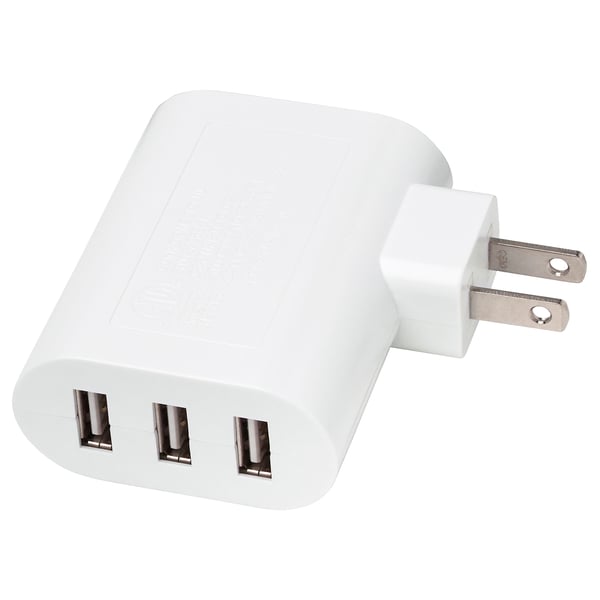
The Evolution of USB Chargers: From Standard to Superfast
The evolution of USB chargers has been nothing short of remarkable, reflecting the rapid advancement of technology in our daily lives. Initially, the standard USB 2.0 allowed for a modest power output of 2.5 watts, which was primarily sufficient for basic devices like keyboards and mice. As the demand for faster charging and high-power devices grew, the advent of USB 3.0 introduced a significant leap with an output of up to 4.5 watts. This increased power offered improved functionality for tablets and smartphones, making it evident that a transition towards more robust charging solutions was necessary.
As we moved into the era of superfast USB charging, innovations like USB Power Delivery (USB PD) and Qualcomm's Quick Charge technology emerged. These advancements allow for power outputs of up to 100 watts, enabling users to charge everything from smartphones to laptops through a single USB-C connection. The focus on efficiency has led to the development of smart chargers that automatically regulate power output, ensuring device compatibility and safety. Consequently, today's USB chargers are not only about speed but also about providing a seamless charging experience for a myriad of devices.
Counter-Strike is a popular tactical first-person shooter game that pits two teams against each other: terrorists and counter-terrorists. Players can choose from a variety of weapons and strategies to outsmart their opponents. For those looking to enhance their gaming experience with mobile accessories, check out the Top 10 iPhone car chargers to keep devices powered during long gaming sessions.
How USB Chargers Are Revolutionizing Our Tech Ecosystem
The advent of USB chargers has ushered in a new era in our tech ecosystem, providing a universal solution that enhances convenience and efficiency. Unlike traditional chargers that vary in size and connectors, USB chargers offer standardized compatibility, allowing users to power up various devices—from smartphones to tablets to laptops—using the same cable. This standardization is not only cost-effective for consumers but also significantly reduces electronic waste, as fewer proprietary chargers are manufactured and discarded. According to recent studies, the growing reliance on USB charging technology can lead to a substantial decrease in our carbon footprint, making it an environmentally friendly choice.
Moreover, the versatility of USB chargers extends beyond simple charging capabilities. Many modern USB devices now support fast charging protocols, enabling users to recharge their gadgets in a fraction of the time compared to traditional chargers. Features such as Power Delivery (PD) and Quick Charge have made it possible to boost battery life rapidly, thereby increasing productivity. As more tech companies adopt USB-C as the default charging interface, we are witnessing a shift that not only simplifies our gadget setup but also enhances connectivity with a single port catering to multiple functionalities, including data transfer and video output.
Are All USB Chargers Created Equal? Understanding Compatibility and Power Delivery
When it comes to USB chargers, many consumers assume that all chargers are interchangeable. However, this is a common misconception. USB chargers vary significantly in terms of power output, compatibility, and safety features. For example, a USB charger rated at 5 watts may be sufficient for charging a smartphone, but it would be inadequate for a tablet or a laptop that requires more power. Additionally, chargers designed for specific devices might have built-in safeguards that protect against overcurrent and short circuits, ensuring a safer charging experience.
Understanding power delivery is crucial for selecting the right USB charger. Power Delivery (PD) is a protocol that allows devices to negotiate the amount of power they need, effectively enabling faster charging for compatible devices. Not all USB chargers support Power Delivery; thus, using a non-PD charger with a PD-compatible device may result in slower charging speeds. To maximize charging efficiency and ensure device safety, always check the specifications and compatibility of your USB charger before plugging it in.